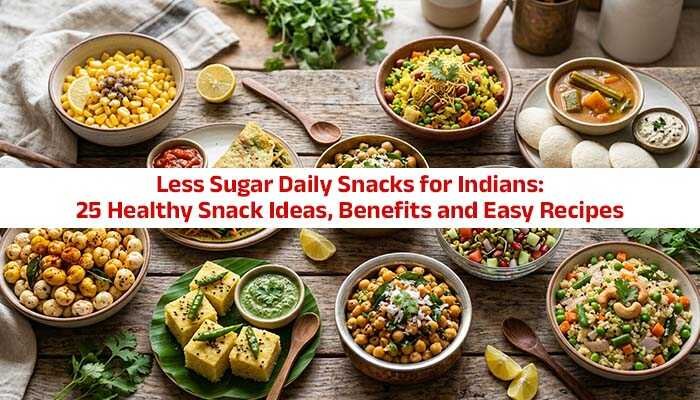
Snacking is a regular part of everyday life in India. A cup of chai with biscuits, samosas during an office break, namkeen while watching television, or a sweet treat after lunch can easily become part of the daily routine. For children, snacks may mean packaged cakes and sweetened drinks; for adults, they might mean bakery products, sweetened coffee or a quick stop at the local snack shop.
There is nothing wrong with enjoying food. The challenge is that many popular snacks contain added sugar, while others provide excess salt, fat or calories without offering much nutritional variety. When these foods become the default choice every day, it can be harder to maintain a balanced eating pattern.
The good news is that Indian cuisine offers plenty of practical alternatives. Roasted chana, fruit, boiled corn, dhokla, vegetable chilla, makhana, sprouts and homemade sandwiches can make snack time both enjoyable and nourishing.
This guide explores less-sugar daily snacks for Indians, including vegetarian options, office snacks, school tiffin ideas, homemade recipes, a seven-day snack plan and practical ways to reduce sugar without giving up traditional foods.
What Are Less-Sugar Snacks?
Less-sugar snacks are foods chosen to reduce added or free sugars while providing useful nutrients and satisfying hunger between meals.
Some snacks contain no added sugar, such as plain roasted chana or a homemade savoury chilla. Others, including whole fruit and plain milk or curd, contain naturally occurring sugars but can still fit into a balanced eating pattern. It is important to understand the difference:
- Added sugars: Sugars added during cooking or manufacturing, such as sugar in biscuits, cakes, sweetened drinks and desserts.
- Free sugars: Added sugars plus sugars naturally present in honey, syrups and fruit juices.
- Naturally occurring sugars: Sugars found in whole fruits and plain milk. These are not treated the same way as free sugars in WHO guidance.
For example, eating a whole guava provides fibre and other nutrients along with naturally occurring sugar. Drinking a sweetened guava beverage may provide added sugar and often less fibre.
Also, less-sugar does not automatically mean low-calorie. Nuts, seeds and roasted snacks can be nutritious but energy-dense, while some packaged products marketed as sugar-free may contain considerable fat or salt.
Why Should Indians Choose Less-Sugar Snacks?
Snacks are often eaten quickly and without much planning. A biscuit with chai may seem insignificant, but several sweetened drinks and snacks throughout the day can add up.
Choosing less-sugar options can help families improve the overall quality of their diet. The aim is not to eliminate every sweet food, but to make nutrient-rich choices more common.
1. Supports Better Overall Nutrition
Many whole-food snacks provide fibre, protein, vitamins or minerals. Roasted chana, fruit, plain curd and vegetable-based snacks offer more variety than relying only on confectionery or sweetened bakery products.
2. Helps Protect Dental Health
Frequent consumption of free sugars increases the risk of tooth decay. Choosing water instead of sugary drinks and limiting the frequency of sweet snacks can support better dental-health habits.
3. Makes Everyday Eating More Balanced
A snack that combines protein, fibre or other useful nutrients may be more satisfying than a highly sweetened drink or confectionery item on its own.
4. Offers Practical Choices for Busy Schedules
Indian snacks such as roasted makhana, fruit, boiled chana and homemade dhokla can be prepared ahead of time. This makes it easier to choose something suitable during office breaks, travel or school hours.
5. Supports a Sustainable Eating Routine
You do not need expensive imported health foods to reduce sugar. Everyday ingredients such as peanuts, pulses, seasonal fruit, curd, corn and vegetables can form the basis of a practical snack routine.
These benefits depend on the overall diet and lifestyle. No individual snack can guarantee weight loss, prevent diabetes or replace appropriate medical care.
Features of a Good Less-Sugar Snack
A useful everyday snack should fit your appetite, schedule, budget and nutritional needs.
| Feature | What to look for | Indian examples |
|---|---|---|
| Low in added sugar | Little or no sugar added during preparation | Plain roasted chana, savoury dhokla |
| Nutrient-rich | Provides useful nutrients rather than just sweetness | Fruit, plain curd, sprouts |
| Contains protein where useful | Helps make the snack more substantial | Chana, paneer, boiled eggs |
| Provides fibre | Includes pulses, vegetables, whole grains or whole fruit | Guava, corn, sprouts |
| Convenient | Easy to prepare, carry or store safely | Makhana, fruit, homemade thepla |
| Affordable | Uses ingredients available locally | Peanuts, seasonal fruit, roasted gram |
| Flexible | Can suit different regional food preferences | Chilla, sundal, dhokla, boiled corn |
A snack does not need to meet every feature at once. Choose options that work for the person eating them and the time of day.
25 Less-Sugar Daily Snacks for Indians
Here are 25 practical snack ideas using familiar Indian ingredients. Most can be prepared without adding sugar.
A. Traditional Indian Snacks
1. Roasted chana: A convenient source of plant protein and fibre. Choose plain or lightly seasoned varieties.
- Roasted makhana: Roast fox nuts with a small amount of oil and mild spices. Avoid heavily sweetened or excessively salty coatings.
- Steamed dhokla: Prepare a savoury version without added sugar. Pair it with a suitable chutney.
- Vegetable chilla: Make a chilla using besan or moong dal batter with onion, tomato, spinach or grated carrot.
- Steamed corn: Serve boiled corn with lemon and mild seasoning rather than butter-heavy or sugary toppings.
- Sundal: This South Indian snack uses cooked chickpeas or other pulses with mustard seeds, curry leaves and coconut if desired.
- Homemade poha: Prepare a small bowl with peas, vegetables and peanuts if suitable. Keep the seasoning savoury.
- Idli: Mini idlis with sambar make a useful snack or light meal. Adjust portions according to hunger.
- Sprouts chaat: Combine properly prepared sprouts with cucumber, tomato, coriander and lemon.
- Vegetable upma: A small serving can work as a snack when you need something more substantial than fruit alone.
B. Fruit-Based Snacks
11. Guava: Eat washed, cut guava as a convenient whole-fruit snack.
- Papaya bowl: Serve fresh papaya cubes on their own or with plain curd.
- Banana with plain curd: This combines fruit with a source of protein and calcium.
- Orange segments: A refreshing option that provides vitamin C and water.
- Seasonal fruit chaat: Combine suitable fruits and use lemon or mild spices for flavour instead of adding sugar.
- Apple slices with a thin layer of nut butter: Choose a suitable nut butter and check for allergies. Adapt the texture and serving style for young children.
Whole fruit contains naturally occurring sugars, but it is generally a better everyday choice than juice when your goal is to reduce free sugars.
C. Protein-Rich and Filling Snack Ideas
17. Boiled chickpeas: Cook chickpeas until soft and season lightly with lemon, coriander and spices.
- Plain curd: Enjoy unsweetened curd with cucumber or a suitable amount of fruit.
- Paneer cubes: Serve plain or lightly seasoned paneer, with cooked vegetables if desired.
- Boiled egg: A convenient protein-rich snack for people who eat eggs. Store and handle it safely.
- Peanuts or mixed nuts: Choose unsweetened varieties and serve a suitable portion. Whole nuts are a choking hazard for young children.
D. Homemade Snacks for Work and School
22. Vegetable sandwich: Use whole-wheat bread with cucumber, tomato, cooked vegetables or paneer.
- Methi thepla: Prepare a savoury thepla and pair it with plain curd when appropriate.
- Moong dal chilla roll: Fill a chilla with cooked vegetables or paneer for a portable snack.
- Homemade vegetable cutlets: Use potato, peas, carrots or other vegetables. Bake, pan-cook or shallow-cook with a moderate amount of oil.
These ideas can be adapted to Gujarati, Maharashtrian, Punjabi, South Indian, Bengali and other regional food preferences. Use seasonal ingredients to keep costs manageable.
Less-Sugar Snack Comparison Table
The table below helps compare common choices by their general nutritional characteristics. Actual nutrition varies with ingredients, recipe, cooking method and portion size.
| Snack | Added sugar when prepared plainly | Protein or fibre contribution | Practical note |
|---|---|---|---|
| Plain roasted chana | None added | Provides protein and fibre | Easy to carry |
| Whole guava | None added | Provides fibre | Choose fresh, whole fruit |
| Plain curd | None added | Provides protein and calcium | Check for added sugar in flavoured versions |
| Roasted makhana | None added | Some nutrients, including carbohydrate | Season lightly |
| Sweetened biscuits | Usually contains added sugar | Varies by product | Check the label |
| Packaged fruit drink | May contain added sugar; juice also contains free sugars | Usually less fibre than whole fruit | Water and whole fruit are better routine choices |
| Homemade dhokla | None added if recipe contains no sugar | Depends on ingredients | Keep chutney and accompaniments in mind |
| Sweetened yoghurt | Often contains added sugar | Provides protein, depending on product | Compare with plain curd |
| Plain boiled corn | None added | Provides carbohydrate and some fibre | Avoid making rich toppings routine |
| Homemade chilla | None added | Protein and fibre depend on flour or pulses used | Add vegetables for variety |
Important: “No added sugar” is not the same as “sugar-free” in every technical or food-labeling context. Naturally occurring sugars may still be present.
Indian Nutrition Facts: Numbers and Percentages to Know
The World Health Organization’s healthy-diet guidance offers useful benchmarks for understanding sugar and snack choices.
| Nutrition guidance | Figure | How to apply it |
|---|---|---|
| Free sugars | Less than 10% of total daily energy | Keep free sugars limited across meals and snacks |
| Lower free-sugar target | Below 5% of total daily energy | WHO suggests this may provide additional health benefits |
| Example for a 2,000-calorie diet | About 50 g at 10%; 25 g at 5% | These are illustrative amounts, not universal limits for every person |
| Fruit and vegetables for people over 10 | At least 400 g per day | Eat a variety of vegetables and whole fruits |
| Fruit and vegetables for children aged 2–5 | At least 250 g per day | Adapt the food and quantity to the child’s needs |
| Fruit and vegetables for children aged 6–9 | At least 350 g per day | Offer produce across meals and snacks |
| Dietary fibre for people over 10 | At least 25 g per day | Choose whole grains, pulses, vegetables and whole fruit |
The WHO’s 2026 healthy-diet fact sheet emphasizes dietary variety, moderation and minimally processed foods low in free sugars and sodium. Its recommendations apply to overall dietary patterns, not just snack time.
ICMR–National Institute of Nutrition’s Dietary Guidelines for Indians 2024 also encourage balanced diets built around varied foods and advise limiting excessive sugar and other nutrients of concern.
These figures are public-health reference points, not a personalized meal plan. Children’s requirements and individual energy needs vary with age, growth, activity and health.
How to Make Less-Sugar Snacks at Home
You do not need complicated recipes to improve your snack routine. A few simple preparation methods can make everyday foods convenient and appealing.
1. Prepare Roasted Chana
Ingredients
- Plain roasted chana
- Lemon juice, if desired
- A small amount of mild seasoning
Method
- Place the roasted chana in a clean, dry container.
- Add seasoning shortly before eating if you prefer it fresh.
- Pack a suitable portion for work or travel.
Choose unsweetened varieties and check packaged versions for added ingredients.
2. Make a Quick Sprouts Chaat
Ingredients
- Properly prepared cooked sprouts
- Chopped cucumber and tomato
- Coriander
- Lemon juice
- Mild spices, if desired
Method
- Cook sprouts thoroughly, especially for children, older adults, pregnant people and anyone with a weakened immune system.
- Let them cool safely.
- Combine with the vegetables, coriander and lemon.
- Serve fresh and refrigerate leftovers promptly.
Raw sprouts can carry harmful bacteria, so thorough cooking is the safer option for people at increased risk of foodborne illness.
3. Prepare Vegetable Chilla
Ingredients
- Besan or moong dal batter
- Finely chopped vegetables
- Water as needed
- A small amount of cooking oil
- Mild spices
Method
- Mix the batter with chopped vegetables.
- Spread it on a heated pan.
- Cook both sides thoroughly.
- Serve with plain curd or a suitable chutney.
This is a flexible recipe: you can change the vegetables according to the season and what is available at home.
4. Assemble a Fruit and Curd Bowl
Ingredients
- Plain curd
- A suitable portion of seasonal fruit
- Cinnamon or cardamom, if desired
Method
- Wash and cut the fruit appropriately.
- Add it to plain curd.
- Sprinkle a little cinnamon or cardamom if desired.
- Serve without adding sugar or syrup.
This snack contains naturally occurring sugars from fruit and milk. It is a no-added-sugar option, not necessarily sugar-free.
Less-Sugar Snacks for Different Situations
For Office Workers
Office snacks should be convenient and easy to store. Useful options include:
- Roasted chana.
- Unsweetened nuts or seeds.
- Whole fruit.
- Plain curd kept chilled.
- Homemade chilla or a vegetable sandwich.
- Boiled corn prepared safely.
If you regularly drink sweetened tea or coffee at work, reducing the sugar in your beverage may be just as useful as changing your snack.
For Schoolchildren
Choose snacks that are filling, age-appropriate and safe to eat. Ideas include:
- Mini idlis.
- Vegetable sandwiches.
- Homemade dhokla.
- Fruit prepared in a suitable size.
- Soft chilla strips.
- Thepla with an appropriate accompaniment.
Avoid choking hazards for younger children, and use insulated containers or cold packs for perishable foods when necessary. Children need adequate energy and nutrients for growth, so the goal is to reduce unnecessary added sugar rather than restrict food intake.
For Older Adults
Some older adults prefer soft, familiar foods, while others need snacks that provide additional protein and energy. Options may include:
- Soft idli with sambar.
- Plain curd.
- Soft-cooked chana or dal-based snacks.
- Paneer prepared in a suitable texture.
- Ripe banana or papaya.
- Vegetable upma.
Adapt texture and portion size to chewing ability, swallowing needs, appetite and medical advice. Older adults who are frail or underweight should not unnecessarily restrict calories.
For People Managing Diabetes
A “less-sugar” snack can still contain carbohydrates, and carbohydrate portions may affect blood glucose.
Possible options, depending on individual meal planning, include plain curd, suitable portions of whole fruit, roasted chana, boiled eggs, paneer or vegetable-based snacks. Pairing foods thoughtfully may be useful, but no single snack is right for everyone.
People who use insulin or glucose-lowering medicines should follow their healthcare professional’s advice, particularly if they experience low blood glucose. A sugar-reduction plan should not replace an individualized diabetes meal plan.
A Seven-Day Less-Sugar Snack Plan for Indians
Use this plan as inspiration rather than a rigid schedule. Select portions according to hunger, age, activity and individual needs.
| Day | Morning or mid-morning snack | Evening snack |
|---|---|---|
| Monday | Guava or another seasonal fruit | Roasted chana |
| Tuesday | Plain curd with suitable fruit | Vegetable chilla |
| Wednesday | Boiled corn | Roasted makhana |
| Thursday | Banana with plain curd | Homemade dhokla |
| Friday | Paneer cubes or a boiled egg | Vegetable sandwich |
| Saturday | Fruit chaat without added sugar | Cooked sprouts chaat |
| Sunday | A small serving of suitable nuts or seeds | Homemade poha or upma |
If you are not hungry between meals, you do not need to snack simply because a schedule says so. Snacks are useful when they meet a genuine need for food, energy or convenience.
How to Reduce Sugar in Your Existing Snack Habits
Changing familiar habits is often easier than replacing every snack at once.
Step 1: Identify Your Most Frequent Sugary Snack
For a few days, notice what you eat and drink between meals. Look at biscuits with chai, packaged juices, sweetened yoghurt, cakes, confectionery or sugary coffee.
Step 2: Choose One Realistic Swap
For example, replace your usual sweetened drink with water on some occasions, or choose roasted chana instead of biscuits on selected days.
Step 3: Reduce Added Sugar Gradually
If you enjoy sweet tea or homemade snacks, reduce the sugar in small steps. You can also use spices such as cardamom, ginger or cinnamon for flavour where suitable.
Step 4: Keep Convenient Alternatives Available
Wash fruit in advance, portion roasted chana, prepare batter for chilla or keep ingredients ready for sandwiches. Convenience often influences food choices.
Step 5: Read Labels When Shopping
Compare similar packaged snacks for added sugar, total sugars, fibre, sodium and saturated fat. Choose according to the whole nutrition profile, not just a “healthy” or “sugar-free” claim.
Step 6: Keep Your Routine Flexible
If you enjoy a sweet during a festival or family gathering, enjoy it without guilt. Return to your normal balanced routine at the next meal rather than trying to compensate with restrictive eating.
Common Mistakes to Avoid
Mistake 1: Replacing Sugar With Jaggery or Honey
Jaggery, honey, brown sugar and syrups still contribute free sugars when added to food. They should not be treated as unlimited or sugar-free alternatives.
Mistake 2: Assuming Fruit Is the Same as Fruit Juice
Whole fruit generally retains more fibre than juice. Fruit juice, even when no sugar is added, contributes free sugars under WHO guidance.
Mistake 3: Choosing Packaged Snacks Only by Their Front Label
A product labelled “sugar-free” may still contain considerable salt, fat or calories. Check the nutrition panel and ingredient list.
Mistake 4: Skipping Meals to Avoid Snacking
The goal is not to suppress hunger. Eat balanced meals and use snacks when they are helpful. Children, pregnant people, older adults and people with specific medical needs may have different nutritional requirements.
Mistake 5: Treating Every Traditional Snack as Unhealthy
Many Indian snacks can be part of a balanced diet. Preparation method, portion size, frequency and ingredients matter. A homemade savoury chilla and a heavily sweetened packaged snack are not nutritionally equivalent.
Mistake 6: Relying on Sweetener Substitutes as the Main Strategy
WHO guidance recommends reducing free sugars without making non-sugar sweeteners the main long-term solution. Gradually becoming comfortable with less-sweet foods and drinks is a more practical starting point.
Frequently Asked Questions
1. What are the best less-sugar snacks for Indians?
Good options include roasted chana, whole fruit, plain curd, roasted makhana, vegetable chilla, boiled corn, steamed dhokla, cooked sprouts and homemade sandwiches. Choose a mix of foods to provide variety rather than relying on one snack every day.
2. Can I eat biscuits on a less-sugar diet?
Yes, biscuits can fit occasionally into a flexible eating pattern. Many varieties contain added sugar and may also be high in fat or refined flour, so they are best not treated as the automatic snack for every tea break.
3. Is fruit suitable for a less-sugar diet?
Whole fruit can generally be part of a balanced diet. It contains naturally occurring sugars alongside fibre and other nutrients. WHO’s free-sugar guidance treats whole fruit differently from fruit juice.
4. Is roasted makhana a sugar-free snack?
Plain roasted makhana prepared without sugar has no added sugar. Flavoured packaged varieties may contain sugar or other ingredients, so check the label. Makhana still provides energy and should be eaten according to appetite and needs.
5. What is a good less-sugar snack for office workers?
Roasted chana, unsweetened nuts, whole fruit, a vegetable sandwich or homemade chilla are practical options. Keep perishable foods such as curd or paneer at a safe temperature.
6. Are less-sugar snacks suitable for people with diabetes?
They can be useful, but less-sugar does not mean carbohydrate-free. Whole fruit, pulses, milk and grains contain carbohydrates that may affect blood glucose. Individual portions and medication needs should be considered with guidance from a healthcare professional or registered dietitian.
7. How can I stop eating sweet snacks every evening?
Start by identifying when and why you reach for them. You may be hungry, tired, thirsty or simply following a routine. Plan a satisfying alternative, reduce the frequency of sugary drinks and snacks gradually, and avoid keeping large quantities of your most tempting snacks readily available if that makes the habit harder to manage.
8. Do I need to stop eating all Indian sweets?
No. The aim is to reduce excessive free sugars, not to eliminate every traditional food. Enjoy sweets occasionally in suitable portions while keeping everyday snacks varied and nutrient-rich.
Conclusion
Less-sugar daily snacks for Indians do not have to be bland, expensive or difficult to prepare. From roasted chana and makhana to fruit, curd, dhokla, chilla and homemade sandwiches, there are plenty of options that fit into familiar eating habits.
The most effective changes are often small: drink water more often, choose whole fruit instead of juice, read packaged food labels, reduce added sugar in homemade recipes and keep convenient snacks ready for busy days.
A balanced snack routine is about more than avoiding sugar. It is about choosing foods that suit your hunger, lifestyle and nutritional needs while allowing room for the foods you enjoy.
Health disclaimer: This article is for general educational purposes and is not a substitute for personalized medical or nutritional advice. People with diabetes, food allergies, swallowing difficulties or other medical conditions may need individualized snack choices. Seek advice from a qualified healthcare professional or registered dietitian when needed.