Children love sweet treats, colourful snacks, flavoured drinks and bakery products. From biscuits in the school tiffin to ice cream after dinner, sugary foods can easily become part of a child’s daily routine. Although enjoying sweets occasionally is normal, consuming too many foods and drinks with added sugar can make it harder for children to get enough nutrients from their everyday meals.
The good news is that Indian families have plenty of delicious alternatives. Homemade poha, vegetable uttapam, besan chilla, fruit bowls, roasted makhana, idli, paneer rolls and many other familiar foods can help create a varied, satisfying diet without adding unnecessary sugar.
A sugar-free food choice for children does not have to mean bland, boring or restrictive meals. The practical goal is to reduce added sugar, offer a variety of nutrient-rich foods, and help children develop healthy eating habits while they grow.
This guide explores sugar-free food items for Indian kids, including breakfast options, school tiffin ideas, snacks, homemade desserts, meal plans and practical tips for parents.
What Does Sugar-Free Food Mean for Children?
Sugar-free eating generally means choosing foods with no added sugar or choosing products labelled sugar-free under applicable food-labeling rules. For everyday family meals, a more useful approach is often to reduce added and free sugars while serving balanced meals.
There is an important difference between naturally occurring sugar and added sugar.
- Naturally occurring sugars: Found in whole fruits and plain milk, along with other nutrients.
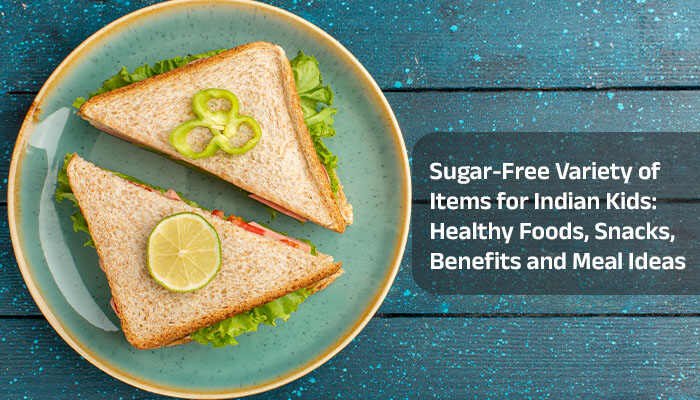
- Added sugars: Sugars added during cooking or manufacturing, such as sugar in biscuits, cakes, sweetened cereals and flavoured drinks.
- Free sugars: Include added sugars as well as sugars naturally present in honey, syrups and fruit juices.
For example, a bowl of whole papaya contains naturally occurring sugar along with fibre and other nutrients. A packaged fruit drink may contain free sugars and provide less fibre. Whole fruit is therefore generally a better everyday choice than juice.
Parents do not need to eliminate all carbohydrates. Foods such as rice, roti, oats, potatoes, millets and pulses provide energy that children need for play, learning and growth.
Why Should Indian Parents Offer More Low-Sugar Foods?
Children’s eating habits often develop through repeated experiences at home, school and social gatherings. Making nutritious foods familiar and accessible can help them learn to enjoy a wider variety of flavours.
Reducing excessive added sugar can support several aspects of a child’s diet.
1. Supports Healthy Growth and Nutrition
Children need adequate energy, protein, healthy fats, vitamins and minerals. When sugary snacks frequently replace balanced meals, children may miss opportunities to obtain these essential nutrients.
Offering foods such as dal, curd, eggs, paneer, vegetables, whole grains and fruit helps make meals more varied.
2. Helps Protect Dental Health
Frequent consumption of sugary foods and drinks increases the risk of tooth decay. Choosing water more often, limiting sugary drinks and maintaining good dental hygiene can help protect children’s teeth.
3. Encourages Better Everyday Eating Habits
A child who regularly eats homemade snacks, whole fruit and balanced meals gets repeated opportunities to become comfortable with different tastes and textures.
The aim is not to ban every sweet food. It is to avoid making highly sweetened products the default choice.
4. Makes School Tiffins More Nutritious
Replacing sweet biscuits and sugary drinks with filling options such as vegetable sandwiches, idli, chilla, fruit and plain curd can improve the overall quality of a school snack or meal.
5. Supports a Balanced Approach to Weight and Energy
Foods high in added sugar can contribute excess energy when consumed frequently. However, children should not be placed on restrictive weight-loss diets without professional guidance. Their food intake must support normal growth and activity.
Features of Healthy Sugar-Free Food Items for Indian Kids
Healthy meals do more than avoid sugar. They should also provide enough nourishment, taste good and fit the family’s budget and routine.
| Feature | What parents can look for | Indian food examples |
|---|---|---|
| No unnecessary added sugar | Choose plain foods and reduce sweetened products | Plain curd, homemade dal, unsweetened porridge |
| Adequate protein | Include protein-containing foods regularly | Dal, rajma, chana, paneer, eggs |
| Fibre-rich ingredients | Offer whole grains, pulses, vegetables and fruit | Oats, whole-wheat roti, guava, peas |
| Healthy fats | Include appropriate amounts of fats and oils | Groundnuts, seeds, nuts, cooking oils |
| Variety of nutrients | Rotate different food groups | Ragi, jowar, bajra, leafy vegetables |
| Child-friendly taste | Use mild spices, familiar flavours and appealing shapes | Mini idlis, vegetable parathas, chilla |
| Convenient preparation | Select foods that can be packed safely | Thepla, vegetable rolls, dhokla without added sugar |
Remember: A food can be sugar-free but still be high in salt, saturated fat or calories. Check the complete nutrition label rather than relying on a single claim on the package.
25 Sugar-Free Food Items for Indian Kids
The following options can be adapted to different ages, appetites, cultural preferences and dietary needs. Unless stated otherwise, prepare them without added sugar and use salt and oil in moderation.
A. Healthy Breakfast Options
Breakfast can combine an energy-giving grain with protein or another nutrient-rich food. Rotate ingredients so children do not have to eat the same meal every day.
| Food item | Main ingredients | Why it can be a useful choice |
|---|---|---|
| 1. Vegetable poha | Poha, peas, carrots, peanuts if suitable | Provides energy and can include vegetables and protein-rich additions |
| 2. Besan chilla | Besan, onion, tomato, coriander | Offers plant protein and can be served with plain curd |
| 3. Vegetable upma | Rava or another grain, vegetables | Provides energy and can be made more varied with vegetables |
| 4. Idli with sambar | Fermented rice-lentil batter, dal and vegetables | Combines grains with pulses and can be served with vegetable-rich sambar |
| 5. Ragi porridge | Ragi flour and milk or a suitable alternative | Provides energy and contributes nutrients such as calcium and iron, depending on ingredients |
| 6. Egg bhurji with roti | Eggs, vegetables and whole-wheat roti | Provides protein and energy for an active morning |
| 7. Plain oats porridge | Oats, milk or water, chopped fruit | Supplies fibre; whole fruit can add natural sweetness |
For younger children, adjust the texture and portion size to their developmental stage. Make sure foods are soft enough to chew safely.
B. Sugar-Free School Tiffin Ideas
School tiffins should be easy to handle, reasonably filling and safe to store until lunchtime.
| Food item | Preparation idea | Packing tip |
|---|---|---|
| 8. Vegetable sandwich | Whole-wheat bread, cucumber, tomato and paneer | Keep moist fillings chilled where needed |
| 9. Mini idlis | Plain idlis with a mild vegetable accompaniment | Use an insulated food container |
| 10. Methi thepla | Whole-wheat flour, methi and curd in the dough | Pack with a suitable savoury accompaniment |
| 11. Paneer roll | Soft roti, paneer and cooked vegetables | Roll tightly and cut into manageable pieces |
| 12. Vegetable dhokla | Besan or a suitable fermented batter, with no added sugar | Pack in a clean, sealed container |
| 13. Moong dal chilla | Soaked and ground moong dal with vegetables | Cut into easy-to-handle portions |
| 14. Stuffed paratha | Potato, paneer or mixed-vegetable filling | Use moderate oil and serve with plain curd if practical |
Avoid packing perishable foods for long periods at unsafe temperatures. Use an insulated lunch bag or cold pack when necessary, especially for dairy, paneer and egg-based foods.
C. Healthy Snacks for Children
Children often become hungry between meals because they are growing and active. A planned snack can be a useful part of their routine.
| Food item | How to serve it | Helpful feature |
|---|---|---|
| 15. Seasonal fruit | Banana, orange, papaya, pear or guava | Provides vitamins, minerals and fibre |
| 16. Roasted makhana | Lightly roasted with mild seasoning | Convenient alternative to many sweet packaged snacks |
| 17. Steamed sweet corn | Serve plain or with mild seasoning | Provides energy and some fibre |
| 18. Boiled chana | Soft cooked chickpeas with mild spices | Provides plant protein and fibre |
| 19. Plain yoghurt or curd | Serve unsweetened with suitable fruit | Provides protein and calcium |
| 20. Homemade vegetable cutlets | Use potato, peas, carrots or other vegetables | Helps introduce vegetables in a familiar format |
| 21. Smooth nut butter on toast | Use a thin layer of suitable nut butter on bread | Adds energy and fat; check for allergies and choking risks |
Whole nuts, popcorn, hard raw vegetables and other choking hazards may be unsuitable for younger children. Adapt snacks to the child’s age and chewing ability, and supervise eating where appropriate.
D. Homemade Sweet-Tasting Alternatives
Children may ask for dessert, particularly during celebrations or after meals. These ideas use ingredients that provide natural flavour without requiring added sugar.
| Food item | Main ingredients | How to make it appealing |
|---|---|---|
| 22. Banana and curd bowl | Plain curd and ripe banana | Mash the banana into the curd for natural sweetness |
| 23. Fruit chaat | Seasonal fruit and a little mild seasoning | Use colourful fruit combinations |
| 24. Baked apple with cinnamon | Soft baked apple and cinnamon | Serve warm after cooling to a safe temperature |
| 25. Homemade fruit yoghurt | Plain yoghurt and mashed fruit | Avoid sweetened flavoured yoghurt or added syrups |
These foods are not necessarily sugar-free in the strict labeling sense. Fruit and milk naturally contain sugars. They are better described as no-added-sugar options when prepared without sweeteners.
Honey, jaggery, brown sugar and date syrup should not be treated as sugar-free substitutes. They still contribute free sugars when added to food. Also, honey should never be given to babies under 12 months.
A Simple 7-Day No-Added-Sugar Meal Plan for Indian Kids
This sample plan gives parents ideas for rotating familiar foods. It is not a fixed diet or a prescribed portion plan. Adjust the amount of food to the child’s age, hunger, activity and growth needs.
| Day | Breakfast | School tiffin or snack | Lunch | Evening snack |
|---|---|---|---|---|
| Monday | Vegetable poha with curd | Banana and paneer sandwich | Roti, dal and cooked vegetables | Roasted makhana and milk |
| Tuesday | Idli with sambar | Guava cut into age-appropriate pieces | Rice, rajma and vegetables | Homemade besan chilla |
| Wednesday | Besan chilla | Plain yoghurt and fruit | Roti, paneer bhurji and vegetables | Steamed corn |
| Thursday | Oats porridge with milk and fruit | Mini idlis | Vegetable khichdi with curd | Soft boiled chana |
| Friday | Egg bhurji with roti | Vegetable sandwich | Roti, dal and seasonal vegetables | Homemade vegetable cutlet |
| Saturday | Vegetable upma | Orange segments prepared safely | Rice, chana and vegetables | Banana-curd bowl |
| Sunday | Ragi porridge with milk | Fruit and a suitable protein-rich snack | Roti, mixed dal and vegetables | Homemade paneer roll |
Dinner can follow the same balanced pattern: a grain such as roti or rice, a protein-containing food such as dal, beans, paneer, eggs or meat, and vegetables. Milk or curd can be included if suitable for the child.
A child does not need to eat every food listed. Use the plan as a starting point and rotate foods based on availability, preference, allergies and family traditions.
Benefits of Reducing Added Sugar in Children’s Diets
1. Better Overall Diet Quality
When children consume fewer sugary drinks and snacks, families have more opportunities to offer foods containing protein, fibre, vitamins and minerals.
2. Lower Exposure to Frequent Sugary Snacks
Reducing the frequency of sugary foods and drinks can help lower free-sugar intake. This is especially useful when sweetened beverages, confectionery and biscuits have become daily habits.
3. Support for Dental Health
Free sugars are a major dietary factor associated with tooth decay. Offering water instead of sugary drinks and keeping sugary snacks occasional can support better oral-health habits.
4. More Opportunities to Develop Food Preferences
Repeated exposure to vegetables, pulses, whole grains and whole fruit can help children become familiar with different flavours. Some children need several low-pressure opportunities before accepting a new food.
5. A More Practical Family Eating Routine
Many suitable foods are already part of Indian home cooking. Families can often make meaningful changes by reducing sugar in recipes, choosing plain versions of everyday foods and preparing snacks ahead of time.
Reducing sugar does not guarantee that a child will avoid dental problems or weight concerns. Overall diet, activity, sleep, dental care, genetics and other factors also matter.
Indian Nutrition Facts Parents Should Know
Reliable nutrition guidance can help families make realistic choices instead of following extreme food trends.
| Nutrition fact | Figure or recommendation | What it means for families |
|---|---|---|
| WHO guidance on free sugars | Less than 10% of total daily energy; ideally below 5% | Keep free sugars low rather than making sweetened foods and drinks everyday staples |
| Fruit and vegetable intake, ages 2–5 | At least 250 g per day | Offer a variety of suitable fruit and vegetables throughout the day |
| Fruit and vegetable intake, ages 6–9 | At least 350 g per day | Include different colours and types of produce |
| Fruit and vegetable intake, age 10 and above | At least 400 g per day | Continue building meals around varied plant foods |
| Dietary fibre, ages 2–5 | At least 15 g per day | Offer age-appropriate whole grains, pulses, fruit and vegetables |
| Dietary fibre, ages 6–9 | At least 21 g per day | Increase variety gradually and provide enough fluids |
| Dietary fibre, age 10 and above | At least 25 g per day | Include pulses, vegetables, whole grains and whole fruit regularly |
These are WHO population-level recommendations, not a personalized prescription for every child. Individual requirements vary with age, growth, activity and health circumstances. The fruit-and-vegetable and fibre figures above are useful reference points, not reasons to force children to finish a particular quantity.
India’s ICMR–National Institute of Nutrition Dietary Guidelines for Indians 2024 also emphasize dietary variety, adequate nutrition during childhood and avoiding foods and beverages with added sugars. The guidelines encourage families to use different cereals, millets, pulses, vegetables and fruits rather than depending on a narrow range of foods.
The key message is that children need a balanced diet—not a diet that simply removes sugar.
How Can Parents Reduce Sugar Without Making Children Feel Deprived?
1. Start With Sugary Drinks
Replace regular soft drinks, sweetened packaged beverages and heavily sweetened homemade drinks with water or other suitable unsweetened options. Plain milk may be appropriate for many children, depending on age and individual needs.
Whole fruit is generally preferable to fruit juice because it retains more fibre and is often more filling.
2. Reduce Sugar Gradually in Homemade Recipes
If a child is used to very sweet porridge, kheer or homemade drinks, gradually reduce the amount of added sugar. Use ingredients such as ripe banana, fruit or spices for flavour where appropriate.
3. Read Packaged Food Labels
Compare products using the nutrition information panel and ingredient list. Look for added sugars and ingredients such as sugar, glucose syrup, fructose syrup and other sweetening syrups.
Do not assume that a product is nutritious simply because its front label says “sugar-free.” Check its overall nutritional quality.
4. Make Healthy Snacks Easy to Reach
Keep washed fruit, suitable curd, homemade chilla or other prepared snacks available. When children are hungry and healthy options are convenient, it becomes easier to avoid relying on packaged sweets.
5. Avoid Using Sweets as a Reward for Every Good Behaviour
Offering sweets every time a child finishes homework or behaves well can make them seem unusually valuable. Try non-food rewards, such as choosing a game, reading a story or spending time together.
6. Let Children Help With Food Preparation
Children can help wash fruit, mix chilla batter, arrange vegetable sandwiches or choose vegetables for the week’s meals. Involving them in safe, age-appropriate cooking tasks can make nutritious food more interesting.
7. Keep Treats in Perspective
A birthday cake or festive sweet does not automatically make a child’s diet unhealthy. Focus on the overall eating pattern rather than making children feel guilty about occasional treats.
Common Mistakes to Avoid
Mistake 1: Replacing sugar with jaggery or honey and assuming it is sugar-free.
Both count as free sugars when used as sweeteners. They should not be considered unlimited alternatives.
Mistake 2: Removing all carbohydrates.
Roti, rice, oats, millets, potatoes and other carbohydrate-containing foods can be part of a healthy diet. Children need enough energy to grow and remain active.
Mistake 3: Giving only fruit when a child needs a filling meal.
Fruit is valuable, but a growing child also needs adequate protein, fats and other nutrients. Pair fruit with suitable foods such as curd, milk, eggs or a pulse-based snack when appropriate.
Mistake 4: Assuming every packaged sugar-free food is healthy.
Some products may be high in salt or saturated fat, or may contain sweeteners that are not necessary for everyday eating. Compare the full label.
Mistake 5: Using food restriction to control a child’s weight.
Children should not be put on highly restrictive diets without qualified professional advice. Growth, appetite and nutritional needs differ between children.
Mistake 6: Expecting children to accept every new food immediately.
Offer new foods repeatedly without pressure. It is normal for children to have preferences, and acceptance can take time.
Frequently Asked Questions
1. Which sugar-free foods are best for Indian kids?
Useful no-added-sugar choices include vegetable poha, idli with sambar, besan chilla, vegetable upma, plain curd, whole fruit, roasted makhana, paneer rolls and homemade vegetable sandwiches. Rotate foods to provide a wide range of nutrients.
2. Can children eat bananas and mangoes on a sugar-free diet?
Whole bananas and mangoes contain naturally occurring sugars and can be part of a balanced diet for most children. The main goal is to limit excessive added and free sugars, not to automatically exclude whole fruit.
3. Is honey a healthy replacement for sugar in children’s food?
Honey is not a sugar-free alternative. It contributes free sugars and should be used sparingly if at all. Honey must never be given to babies younger than 12 months.
4. What can I pack for a sugar-free school tiffin?
Try vegetable sandwiches, mini idlis, paneer rolls, methi thepla, moong dal chilla or vegetable dhokla prepared without added sugar. Add a suitable fruit or other snack depending on the child’s appetite and school schedule.
5. Are sugar-free biscuits good for children?
Not necessarily. Sugar-free biscuits may still contain refined flour, saturated fat or other ingredients that make them less suitable as everyday snacks. Whole foods and varied homemade options are often better choices for regular meals.
6. How can I reduce my child’s sugar cravings?
Begin by reducing sweetened drinks and frequent sugary snacks. Offer regular balanced meals, suitable snacks and whole fruit. Avoid using sweets as the default reward, and make changes gradually so the new routine feels manageable.
7. Do children need to avoid all sweets?
No. The goal is to limit excessive free sugars and establish a balanced eating pattern, not to create fear around food. Occasional sweets can fit into family celebrations and a varied diet.
8. Is a sugar-free diet suitable for every child?
A no-added-sugar approach can be useful for many families, but a strict sugar-free or highly restrictive diet is not automatically appropriate for every child. Children with medical conditions, poor growth, food allergies or specific nutritional needs may require individualized advice from a qualified healthcare professional.
Conclusion
Offering a variety of sugar-free and no-added-sugar food items for Indian kids can be simpler than it sounds. Everyday options such as poha, idli, chilla, vegetable paratha, dal, paneer, plain curd, roasted makhana and whole fruit can help families build enjoyable meals without relying heavily on sugary packaged products.
The most important principle is balance. Children need sufficient food, protein, healthy fats, carbohydrates, vitamins and minerals for growth and activity. Rather than banning every sweet food or removing entire food groups, parents can reduce unnecessary added sugar, offer varied meals and create a positive relationship with food.
Small, consistent changes at home can help children become familiar with nutritious everyday foods while leaving room for the occasional treat.
Health disclaimer: This article is for general educational purposes and is not a substitute for personalized medical or nutritional advice. Children’s nutritional requirements vary by age, growth, activity and health status. Consult a pediatrician or registered dietitian before making major dietary changes, particularly if a child has a medical condition, food allergy, poor growth or feeding difficulties.