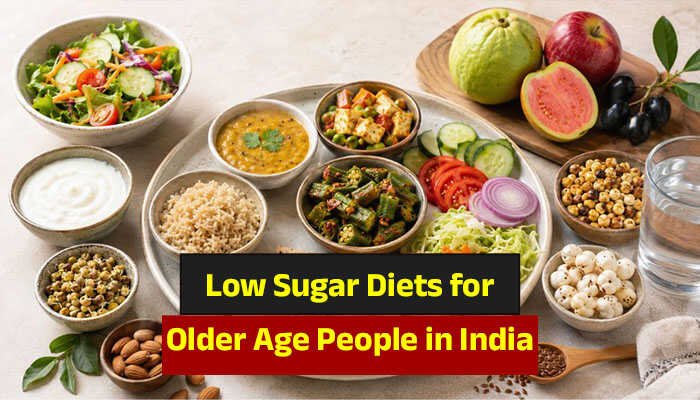
As people grow older, eating habits often change. Appetite may become smaller. Physical activity may decrease. Taste and smell can change. Some people may have difficulty chewing or digesting certain foods. Others may be managing diabetes, high blood pressure, heart disease, high cholesterol or other age-related health conditions.
This is why a low-sugar diet for older adults should not simply mean “stop eating sweets.” The better approach is to build meals that are nutritious, easy to eat, culturally familiar and lower in unnecessary added sugar.
For an older person in India, this might mean replacing sweet chai with lightly sweetened or unsweetened tea, choosing whole fruit instead of fruit juice, eating plain curd instead of sweetened yoghurt, reducing mithai portions and building meals around vegetables, pulses, whole grains and appropriate protein.
India’s elderly population is already substantial. ICMR-NIN defines an elderly person as someone aged 60 years or older and notes that the 2011 Census recorded more than 100 million older adults, representing 8.6% of India’s population. The same guidance projects the elderly population could reach 323 million, or 20% of the population, by 2050.
That makes healthy ageing and practical nutrition increasingly important.
What Is a Low-Sugar Diet for Older Adults?
A low-sugar diet generally means reducing added and free sugars rather than eliminating every food that contains naturally occurring sugar. Added sugar can come from:
- Table sugar
- Jaggery
- Honey
- Sugar syrups
- Sweetened beverages
- Mithai
- Cakes and pastries
- Biscuits
- Sweetened yoghurt
- Flavoured milk
- Desserts
- Packaged snacks
Whole fruit contains naturally occurring sugar but also provides fibre and nutrients. Plain milk contains naturally occurring lactose.
Rice, roti, oats and other grains contain carbohydrates but are not simply the same thing as added sugar.
This distinction is particularly important for older adults because unnecessarily eliminating nutritious foods can make it harder to meet energy and nutrient needs.
WHO recommends keeping free sugars below 10% of total daily energy, with a reduction below 5% providing additional health benefits. WHO also recommends that carbohydrates primarily come from whole grains, vegetables, fruits and pulses.
Why Low-Sugar Eating Matters for Older Indians
Ageing does not automatically mean a person should follow a highly restrictive diet. In fact, the opposite can sometimes be true.
Older adults need nutrient-dense foods because appetite may decline while the need for important nutrients remains.
ICMR-NIN’s Dietary Guidelines for Indians 2024 specifically state that older adults need nutrient-rich foods containing adequate vitamins and minerals, good-quality protein, complex carbohydrates and dietary fibre. The guidance also highlights adequate water intake because dehydration is common among older adults.
Therefore, a good low-sugar diet should replace sugary foods with nutritious foods, not simply remove calories.
Key Features of a Low-Sugar Diet for Older Adults
| Feature | Practical approach |
|---|---|
| Lower added sugar | Reduce sugar in tea, coffee, desserts and recipes |
| Adequate protein | Include dal, curd, paneer, eggs, fish, chicken or other suitable sources |
| More vegetables | Include different vegetables throughout the week |
| Whole fruit | Prefer whole fruit over juice |
| Fibre-rich foods | Use pulses, vegetables, whole grains, nuts and seeds |
| Hydration | Drink adequate fluids unless medically restricted |
| Smaller portions | Particularly useful for sweets and calorie-dense foods |
| Easy-to-chew foods | Adapt texture when dental or chewing problems exist |
| Familiar Indian foods | Use traditional dishes rather than unnecessarily restrictive foods |
| Meal consistency | Avoid regularly skipping meals |
| Individualisation | Adapt the diet for diabetes, kidney disease and other conditions |
Low Sugar Does Not Mean No Carbohydrates
This is one of the most important points for older adults. A low-sugar diet is not automatically a low-carbohydrate diet.
Rice, roti, oats, millets, potatoes and other carbohydrate-containing foods can be part of a balanced diet. The focus should be on:
- Portion size
- Food quality
- Meal balance
- Fibre
- Protein
- Overall dietary pattern
For example:
Less balanced meal
Large serving of rice + very little protein + sweetened beverage + dessert
More balanced meal
Appropriate rice portion + dal + vegetables + curd + salad
The second meal still contains carbohydrates, but it provides a broader nutritional balance. WHO states that carbohydrates should primarily come from whole grains, vegetables, fruits and pulses.
How Much Sugar Should Older Adults Eat?
There is no single sugar allowance that is appropriate for every older person. Energy requirements vary according to:
- Body size
- Physical activity
- Medical conditions
- Appetite
- Medications
- Weight status
- Overall diet
WHO’s general recommendation is to keep free sugars below 10% of daily energy intake and ideally below 5%. On a 2,000-kcal diet, 10% is approximately 50 g, while 5% is approximately 25 g.
ICMR-NIN’s 2024 elderly dietary example states that added sugar should be restricted to less than 5% of daily energy. Its reference menu for a normally nourished elderly man includes approximately 1,740 kcal and 62 g protein, while noting that energy requirements vary according to body weight and physical activity.
These figures should not be treated as a personalised prescription.
Best Low-Sugar Indian Foods for Older Adults
A healthy low-sugar diet can include many familiar Indian foods.
Vegetables
- Lauki
- Tori
- Bhindi
- Carrot
- Beans
- Cabbage
- Cauliflower
- Spinach
- Methi
- Pumpkin
- Brinjal
- Tomato
- Capsicum
- Peas in appropriate portions
Pulses and legumes
- Moong dal
- Masoor dal
- Toor dal
- Chana dal
- Rajma
- Chole
- Moong
- Black-eyed peas
Protein-rich foods
- Plain curd
- Paneer
- Tofu
- Eggs
- Fish
- Chicken
- Milk, when suitable
- Pulses and legumes
Whole-food carbohydrate sources
- Whole wheat
- Oats
- Millets
- Brown rice
- Hand-pounded rice
- Other whole grains
Healthy snack options
- Roasted chana
- Nuts
- Seeds
- Makhana
- Sprouts
- Whole fruit
- Plain curd
Foods to Reduce on a Low-Sugar Diet
Reducing these foods does not necessarily mean banning them forever.
| Food | Practical approach |
|---|---|
| Mithai | Smaller portions and less frequent consumption |
| Jalebi | Occasional rather than routine |
| Gulab jamun | Small portion |
| Ladoo | Occasional |
| Cakes | Limit frequency |
| Biscuits | Reduce routine snacking |
| Sweetened tea | Gradually reduce sugar |
| Soft drinks | Prefer water |
| Fruit juice | Prefer whole fruit |
| Sweet lassi | Choose unsweetened lassi/chaas |
| Flavoured yoghurt | Choose plain curd |
| Sweetened cereal | Choose unsweetened options |
| Bakery pastries | Occasional food |
1. Start With Morning Tea
For many older Indians, morning tea is part of the daily routine. The issue is usually not tea itself but how much sugar is added.
If someone drinks two cups daily with two teaspoons of sugar in each cup, that is approximately four teaspoons of added sugar just from tea. A gradual reduction may be easier:
2 teaspoons → 1½ → 1 → ½ → unsweetened
Cardamom, ginger, cinnamon or other spices can provide flavour without adding sugar.
For an older person with diabetes or medication-related glucose concerns, dietary changes should be discussed with their healthcare professional.
2. Choose a Protein-Rich Breakfast
Older adults can have reduced appetite, so breakfast should provide useful nutrition rather than filling the stomach primarily with sugar.
Good Indian breakfast examples
- Moong dal chilla + curd
- Besan chilla + vegetables
- Vegetable poha + curd
- Vegetable upma
- Idli + sambar
- Egg + vegetable preparation
- Plain oats + nuts/seeds
- Vegetable dalia
- Thepla with vegetables and plain curd
The exact quantity depends on individual needs.
3. Choose Whole Fruit Instead of Juice
Fruit can be part of a healthy low-sugar diet. The important distinction is between:
whole fruit
and
fruit juice
WHO notes that fruit juice, including varieties without added sugar, can contain significant amounts of free sugars.
Better choices
Instead of:
- Orange juice → whole orange
- Apple juice → whole apple
- Guava juice → guava
- Watermelon juice → watermelon pieces
- Mango juice → appropriate portion of whole mango
Whole fruit also provides dietary fibre.
4. Make Plain Curd a Regular Food
Plain curd can be a convenient Indian food for older adults. Instead of buying sweetened yoghurt, try:
Plain curd + suitable whole fruit + a few nuts
This creates a snack or meal component without automatically adding sugar.
However, people with milk intolerance, kidney disease or other medical conditions may need individual guidance.
5. Replace Biscuits With Better Snacks
Biscuits often become a habitual accompaniment to tea. One biscuit becomes two. Two become four.
Then the same routine happens every afternoon. Try replacing some biscuit occasions with:
- Roasted chana
- Makhana
- Almonds
- Walnuts
- Peanuts
- Sprouts
- Plain curd
- Whole fruit
- Boiled egg
The best choice depends on chewing ability, allergies, medical conditions and the person’s overall diet.
6. Keep Sweets for Special Occasions
Older adults should not necessarily be told that traditional sweets are permanently forbidden. Food is also culture, memory and family connection. A better approach is:
Less frequently + smaller portions + mindful enjoyment
For example, during Diwali, an older family member may enjoy one small piece of their favourite mithai rather than eating multiple sweets every day for a week.
The aim is to control routine sugar intake without removing cultural enjoyment.
7. Reduce Sugar in Homemade Recipes
Home cooking provides an important advantage: you control the ingredients. Sugar can often be reduced in:
- Kheer
- Halwa
- Shrikhand
- Homemade drinks
- Desserts
- Chutneys
- Some breakfast recipes
- Homemade yoghurt preparations
However, do not automatically replace sugar with large quantities of jaggery or honey. When used as sweeteners, jaggery and honey still contribute free/added sugars.
8. Build a Balanced Lunch
A low-sugar lunch should still be nutritious.
Example
Option 1
- 1–2 appropriate rotis
- Dal
- Mixed vegetable sabzi
- Plain curd
- Salad
Option 2
- Appropriate rice portion
- Rajma
- Vegetable sabzi
- Salad
Option 3
- Roti
- Fish or chicken
- Vegetable preparation
- Curd
Portions should be adapted to the person’s energy requirements and medical needs.
9. Choose Soft Foods When Chewing Is Difficult
Some older adults have dental problems or difficulty chewing. A low-sugar diet should not force them to eat foods that are difficult to consume. Consider softer options such as:
- Moong dal khichdi
- Soft vegetable dalia
- Dal
- Soft-cooked vegetables
- Idli
- Soft chilla
- Plain curd
- Soft paneer preparations
- Egg preparations
- Well-cooked pulses
The goal is nutritious + low in unnecessary sugar + easy to eat.
10. Pay Attention to Hydration
Older adults can be vulnerable to dehydration. ICMR-NIN specifically highlights adequate water intake as important for older adults because dehydration can be common in this age group. Good options can include:
- Water
- Unsweetened beverages
- Plain chaas
- Soup without excessive salt
- Water-rich foods
However, people who have been advised to restrict fluids because of certain medical conditions should follow their clinician’s instructions.
11. Make Dinner Light but Nutritious
Dinner does not have to be extremely small. A sensible dinner can include:
- Vegetable soup + protein
- Dal + vegetables + roti
- Khichdi + curd
- Vegetable dalia
- Roti + paneer + vegetables
- Fish + vegetables + appropriate carbohydrate portion
Avoid automatically adding dessert after dinner. If an older adult is losing weight unintentionally or has poor appetite, reducing food too aggressively may be counterproductive.
12. Avoid Making Every “Healthy” Food Sugar-Free
Older adults need variety. A low-sugar diet should not become a repetitive menu consisting only of salads and boiled vegetables. Indian foods can remain enjoyable:
- Dal tadka
- Vegetable curry
- Palak paneer
- Bhindi
- Lauki
- Chana
- Rajma
- Idli
- Dosa
- Poha
- Upma
- Khichdi
- Fish curry
- Chicken curry
The focus is on reducing unnecessary added sugar and maintaining overall dietary balance.
13. Be Careful With Packaged “Healthy” Foods
Some products marketed toward older adults may contain added sugar. Check labels on:
- Breakfast cereals
- Granola
- Protein bars
- Flavoured yoghurt
- Health drinks
- Malted beverages
- Biscuits
- Ready-to-drink beverages
- Packaged juices
Look for:
- Total sugars
- Added sugars, where declared
- Serving size
- Carbohydrate
- Fibre
- Ingredient list
Do not rely only on words such as “natural,” “traditional,” “multigrain” or “fortified.”
14. Don’t Assume Jaggery Is a Low-Sugar Food
This is particularly important in Indian diets. Jaggery is often used because it is considered more traditional.
But:
Sugar → jaggery
does not mean:
high sugar → low sugar
If jaggery is added to tea, sweets, porridge or other foods, it still contributes free/added sugar. The goal is to reduce the amount of added sweetener rather than simply change its name.
15. Plan Evening Snacks
Evening is often when older adults consume tea, biscuits and sweets. Create a predictable alternative.
Example routine
4:30 PM: Unsweetened tea or lightly sweetened tea
Snack: Roasted chana or a small portion of nuts
5:00 PM: Light walk if medically appropriate
This can reduce automatic evening snacking.
16. Build a Low-Sugar Family Environment
Older adults often eat what the rest of the household eats. If the kitchen contains:
- Mithai
- Biscuits
- Cakes
- Sweetened drinks
- Chocolates
they may become routine foods.
Instead, keep convenient options such as:
- Fruit
- Nuts
- Roasted chana
- Makhana
- Plain curd
- Vegetables
- Sprouts
This makes healthier choices easier without requiring constant willpower.
17. Reduce Sweet Drinks
Some drinks can contain more sugar than people realise.
Limit routine consumption of:
- Soft drinks
- Sweetened juices
- Sweet lassi
- Milkshakes
- Sherbet
- Flavoured milk
- Sweetened cold coffee
- Packaged fruit drinks
Better options
- Water
- Unsweetened tea
- Unsweetened coffee
- Plain chaas
- Water with lemon and mint without added sugar
WHO recommends limiting drinks high in free sugars, including soft drinks, fruit drinks, syrups and sweetened milk or yoghurt drinks.
18. Use the “Protein + Fibre” Approach
A useful meal-planning concept for older adults is to combine:
Protein + fibre-rich foods + appropriate carbohydrates + vegetables
For example:
Meal 1
Moong dal + vegetables + roti + curd
Meal 2
Rajma + vegetables + appropriate rice portion
Meal 3
Egg + vegetable preparation + roti
Meal 4
Fish + vegetables + appropriate carbohydrate portion
This provides a more balanced meal than relying primarily on refined or sugary foods.
19. Include Different Vegetables
WHO recommends at least 400 g of fruit and vegetables per day for people over age 10 as a general population dietary target. For older adults, vegetables can be included through:
- Sabzi
- Dal with vegetables
- Soup
- Salad when appropriate
- Stuffed vegetables
- Mixed vegetable curry
- Khichdi
- Chutneys
Texture can be modified for people with chewing difficulties.
20. Include Fibre-Rich Foods
WHO recommends adults consume at least 25 g of naturally occurring dietary fibre per day. Indian sources include:
- Whole grains
- Pulses
- Beans
- Vegetables
- Whole fruit
- Nuts
- Seeds
- Oats
- Millets
Increase fibre gradually and maintain appropriate fluid intake unless fluid restriction has been medically advised.
Low-Sugar Indian Breakfast Ideas for Older Adults
| Breakfast | Suggested combination |
|---|---|
| Moong dal chilla | Chilla + plain curd |
| Besan chilla | Vegetables + curd |
| Poha | Vegetable poha + protein source |
| Idli | Idli + sambar |
| Vegetable upma | Upma + curd |
| Oats | Plain oats + nuts/seeds |
| Dalia | Vegetable dalia |
| Eggs | Eggs + vegetables + suitable roti |
| Thepla | Small portion + vegetables + plain curd |
Low-Sugar Indian Lunch Ideas
| Meal | Example |
|---|---|
| North Indian | Roti + dal + sabzi + curd |
| Gujarati | Roti + dal + vegetable + chaas |
| South Indian | Rice in suitable portion + sambar + vegetables |
| Maharashtrian | Bhakri/roti + vegetable + dal |
| Bengali | Rice in suitable portion + fish + vegetables |
| Punjabi | Roti + dal + vegetable + curd |
| Vegetarian | Khichdi + vegetables + curd |
| Non-vegetarian | Roti/rice + fish/chicken + vegetables |
Low-Sugar Dinner Ideas
Dinner can be simple.
Option 1
Moong dal khichdi + vegetables + plain curd
Option 2
2 small rotis, if appropriate + lauki sabzi + dal
Option 3
Vegetable soup + paneer/tofu + appropriate carbohydrate portion
Option 4
Fish + vegetables + roti
Option 5
Vegetable dalia + curd
Option 6
Egg bhurji + vegetables + roti
Healthy Low-Sugar Snack Ideas
| Snack | Why it works as an option |
|---|---|
| Roasted chana | Convenient and protein-containing |
| Makhana | Easy to portion |
| Almonds | Nutrient-dense |
| Walnuts | Nutrient-dense |
| Plain curd | Protein-containing dairy option |
| Whole fruit | Provides fibre and nutrients |
| Sprouts | Plant protein and fibre |
| Boiled egg | Protein-rich |
| Vegetable soup | Hydrating and vegetable-based |
| Peanuts | Protein and healthy fats |
Portion sizes should be appropriate for the person’s overall energy requirements.
7-Day Low-Sugar Meal Plan for Older Adults in India
This is a general example, not an individual medical diet.
| Day | Breakfast | Lunch | Snack | Dinner |
|---|---|---|---|---|
| Monday | Moong chilla + curd | Roti + dal + sabzi | Roasted chana | Khichdi + vegetables |
| Tuesday | Vegetable poha | Rice + rajma + vegetables | Nuts + tea | Roti + paneer + sabzi |
| Wednesday | Idli + sambar | Roti + dal + vegetables | Plain curd | Vegetable dalia |
| Thursday | Besan chilla | Rice + fish + vegetables | Makhana | Roti + dal + sabzi |
| Friday | Oats + nuts | Roti + chana + vegetables | Whole fruit | Khichdi + curd |
| Saturday | Vegetable upma | Roti + chicken/fish + vegetables | Roasted chana | Dal + vegetables + roti |
| Sunday | Eggs + vegetables | Family meal with controlled portions | Fruit/nuts | Light vegetable-based dinner |
Meals should be adjusted for diabetes, kidney disease, swallowing difficulties, allergies, undernutrition, medication schedules and other health conditions.
Example Daily Routine for an Older Indian Adult
7:00 AM
Water, unless medically restricted.
7:30–8:30 AM
Balanced breakfast.
10:30–11:00 AM
Whole fruit if appropriate.
1:00 PM
Balanced lunch.
4:00–5:00 PM
Unsweetened tea/coffee or another suitable beverage + nutritious snack.
7:00–8:00 PM
Balanced dinner.
After dinner
Water or an unsweetened beverage rather than an automatic dessert.
The exact timing should follow the person’s normal routine and medical requirements.
Benefits of a Low-Sugar Diet for Older Adults
1. Better Overall Diet Quality
Reducing sweets and sugary beverages creates more room for vegetables, pulses, whole grains, protein and other nutrient-rich foods.
2. Better Calorie Control
Sugary foods and beverages can contribute calories without providing the broad range of nutrients found in many whole foods. Reducing them can support appropriate energy intake.
3. Support for Healthy Weight Management
For older adults carrying excess weight, reducing high-sugar foods may help lower overall calorie intake. However, intentional weight loss should not be pursued aggressively without appropriate guidance, particularly if an older person is frail or already losing weight.
4. Better Dental Habits
WHO identifies free sugar consumption as an important risk factor for dental caries and recommends keeping free sugar intake low throughout life.
5. Better Blood-Glucose Management for Some People
For older adults with diabetes, reducing added sugar can help reduce one source of rapidly available carbohydrate. However, diabetes management depends on the entire diet, medication, physical activity and individual circumstances.
6. More Stable Eating Habits
A predictable meal and snack routine can be easier to maintain than constantly reacting to hunger and cravings.
7. Better Nutrient Density
Replacing sweets with nutrient-rich foods can improve the overall nutritional value of the diet.
8. Better Hydration Choices
Replacing sugary drinks with water and suitable unsweetened beverages can support healthier fluid intake.
Indian Factual Data About Older Adults and Nutrition
| Indian fact | Figure |
|---|---|
| Age used by ICMR-NIN to define elderly | 60+ years |
| Elderly population in 2011 Census | 100+ million |
| Share of India’s population aged 60+ in 2011 | 8.6% |
| Projected elderly population by 2050 | 323 million |
| Projected share by 2050 | 20% |
| ICMR-NIN reference elderly male diet | ~1,740 kcal/day |
| Protein in that reference menu | ~62 g/day |
| Added sugar recommendation in reference elderly menu | <5% of daily energy |
| WHO fruit & vegetable target for people >10 | ≥400 g/day |
| WHO naturally occurring fibre target for adults | ≥25 g/day |
The elderly-population figures come from ICMR-NIN’s Dietary Guidelines for Indians 2024. The reference diet is explicitly for a normally nourished elderly man weighing 65 kg with BMI 18.5–23 and adequate physical activity, so it should not be interpreted as a universal 1,740-kcal meal plan for every older adult.
Low-Sugar Diets for Older Adults With Diabetes
Diabetes becomes increasingly common with age, making sugar reduction especially relevant.
A Ministry of Health analysis using LASI Wave 1 data reported diabetes prevalence of approximately 14% among Indians aged 60 and above, compared with 10% among those aged 45–59 in the analysis. Hypertension prevalence was approximately 33% among the 60+ group.
For older adults with diabetes, focus on:
- Reduced added sugar
- Appropriate carbohydrate portions
- Whole foods
- Adequate protein
- Vegetables
- Fibre
- Regular meals
- Prescribed medication
- Glucose monitoring as advised
Important
A low-sugar diet does not mean a carbohydrate-free diet.
Rice, roti, dal, fruit and milk can still be part of an individualised eating pattern.
Low-Sugar Eating for Older Adults With High Blood Pressure
Sugar is not the only dietary factor to consider. Older adults with hypertension may also need to pay attention to sodium and overall dietary quality.
WHO recommends less than 2 g of sodium per day, equivalent to less than 5 g of salt per day, for adults. Therefore, a useful Indian meal strategy can be:
Less added sugar + moderate salt + more vegetables + appropriate protein + suitable whole grains
Instead of focusing on only one nutrient.
Low-Sugar Diets for Underweight or Frail Older Adults
This is an important exception. If an older adult is:
- Losing weight unintentionally
- Eating very little
- Frail
- Experiencing poor appetite
- Recovering from illness
- Having difficulty swallowing
- Losing muscle mass
simply cutting calories and removing foods may not be appropriate.
The priority may be nutrient density and adequate energy/protein, while still reducing unnecessary added sugar.
For example:
Instead of:
Sweet biscuits + tea
consider:
Plain curd + suitable fruit + nuts
or another nutrient-dense option recommended by a dietitian.
Unintentional weight loss in an older adult should be discussed with a healthcare professional.
How Families Can Help Older Adults Follow a Low-Sugar Diet
Family support can make a huge difference.
1. Don’t Serve Large Sweet Portions
Serve smaller portions rather than asking the person to refuse them.
2. Keep Healthy Snacks Visible
Place fruit, roasted chana or nuts where they are easy to access.
3. Reduce Sugar in Household Tea
If everyone gradually reduces sugar, the older adult does not feel singled out.
4. Cook One Balanced Family Meal
Avoid making the older person feel that they have to eat completely different food.
5. Read Labels Together
Make grocery shopping a family activity.
6. Respect Food Preferences
Older adults may have strong cultural and emotional connections with particular foods. A sustainable diet should make room for those preferences where medically appropriate.
Common Mistakes Older Adults Should Avoid
Mistake 1: Removing All Fruits
Whole fruit can be part of a healthy diet.
Mistake 2: Replacing Sugar With Jaggery
Jaggery is still a source of added/free sugar when used as a sweetener.
Mistake 3: Drinking “Healthy” Fruit Juice
Juice can contain significant free sugars even without added sugar.
Mistake 4: Eating Only Salads
Older adults need adequate energy, protein and nutrients.
Mistake 5: Eliminating All Rice and Roti
Carbohydrates are not synonymous with added sugar.
Mistake 6: Following a Very Low-Calorie Diet
This may be inappropriate for older adults who are underweight or losing weight.
Mistake 7: Ignoring Protein
A low-sugar diet still needs adequate protein.
Mistake 8: Forgetting Hydration
Older adults can be vulnerable to dehydration.
Mistake 9: Eating “Sugar-Free” Packaged Foods Without Checking Labels
Sugar-free does not necessarily mean nutritious or low in carbohydrate.
Mistake 10: Making Sudden Dietary Changes Without Medical Advice
This is especially important when the person has diabetes, kidney disease, heart disease, swallowing difficulties or takes multiple medications.
How to Make Indian Food Tasty Without Extra Sugar
Reducing sugar does not mean meals have to become bland. Use:
Spices
- Cumin
- Coriander
- Turmeric
- Black pepper
- Cardamom
- Cinnamon
- Mustard seeds
Herbs
- Coriander
- Mint
- Curry leaves
- Fenugreek leaves
Flavour builders
- Ginger
- Garlic
- Lemon
- Tomato
- Tamarind in appropriate amounts
These can add complexity and flavour without making sugar the centre of the dish.
A Simple Low-Sugar Grocery List for Older Adults
Vegetables
- Spinach
- Lauki
- Bhindi
- Beans
- Carrot
- Cabbage
- Cauliflower
- Pumpkin
- Tomato
- Brinjal
Protein foods
- Moong dal
- Masoor dal
- Toor dal
- Chana
- Rajma
- Curd
- Paneer
- Eggs
- Fish
- Chicken
Whole-food carbohydrates
- Whole wheat
- Oats
- Dalia
- Millets
- Rice in appropriate portions
Snacks
- Almonds
- Walnuts
- Roasted chana
- Makhana
- Seeds
- Whole fruit
Drinks
- Water
- Unsweetened tea
- Unsweetened coffee
- Plain chaas
A 10-Point Low-Sugar Checklist
An older adult can use this simple checklist:
- I reduced sugar in my tea or coffee.
- I avoided sugary drinks today.
- I chose whole fruit instead of juice.
- I included vegetables in my meals.
- I included an appropriate protein source.
- I limited biscuits and sweets.
- I checked labels on packaged foods.
- I drank adequate fluids unless restricted.
- I kept portions sensible.
- I followed my healthcare professional’s advice for any medical condition.
The goal is not to achieve ten out of ten every day. The goal is to gradually make healthier habits normal.
Frequently Asked Questions
1. Is a low-sugar diet safe for older adults?
Generally, reducing unnecessary added sugar can be part of a healthy diet, but older adults should not follow overly restrictive diets that reduce essential calories or nutrients. ICMR-NIN specifically emphasises nutrient-dense foods, adequate protein, complex carbohydrates, fibre and hydration for older adults.
2. Should older adults completely stop eating sweets?
Not necessarily. A practical approach is to reduce frequency and portion size. People with diabetes or other medical conditions may need more individualised advice.
3. Can older adults eat fruit?
Yes, whole fruit can be part of a balanced diet. The amount and type may need to be individualised for people with diabetes or other conditions.
4. Is jaggery better than sugar?
Jaggery is not a sugar-free food. When used as a sweetener, it contributes free/added sugar.
5. Can older adults eat rice?
Yes, rice can be part of a balanced diet. Portion size and the rest of the meal matter, especially for people with diabetes.
6. Is roti better than rice for older adults?
There is no universal answer. The appropriate choice depends on the person’s nutritional needs, portion size, food preferences, glucose management and overall meal pattern.
7. What is the best low-sugar breakfast for older adults?
There is no single best breakfast. Options such as moong dal chilla with curd, vegetable poha, idli with sambar, vegetable upma or eggs with vegetables can provide a more balanced start to the day than a breakfast dominated by sugary foods.
8. Can older adults drink fruit juice?
It is generally preferable to choose whole fruit more often. WHO notes that fruit juice can contain significant free sugars, including when no additional sugar is added.
9. Should older adults avoid all carbohydrates?
No. Carbohydrates can be part of a healthy diet. WHO recommends obtaining carbohydrates primarily from whole grains, vegetables, fruits and pulses.
10. What should an older adult with diabetes do?
They should reduce unnecessary added sugar while paying attention to total carbohydrate intake, meal portions, medication, physical activity and glucose monitoring. A personalised plan from a doctor or registered dietitian is particularly useful.
11. Can older adults eat desserts during festivals?
For many people, occasional small portions can fit into an otherwise balanced eating pattern. However, people with diabetes or other medical conditions should follow their individual dietary advice.
12. Does a low-sugar diet help older adults lose weight?
Reducing high-sugar foods can reduce calorie intake and may support weight management in some people. But intentional weight loss is not always appropriate for older adults, especially those who are underweight, frail or experiencing unintentional weight loss.
Final Thoughts
A low-sugar diet for older adults in India should not be about making food restrictive, complicated or joyless. It should be about making everyday food more nutritious while reducing unnecessary sweetness. That can mean:
Less sugar in chai.
More vegetables in meals.
Whole fruit instead of juice.
Plain curd instead of sweetened yoghurt.
Dal, paneer, eggs, fish or other suitable protein sources regularly.
Smaller portions of mithai.
More water and fewer sugary beverages.
More whole grains, pulses and fibre-rich foods.
And perhaps most importantly, the diet should respect the person’s culture, preferences, appetite and health status.
For an older Indian adult, healthy eating is not simply about adding years to life. It is about supporting strength, independence, enjoyment of food and quality of life.
The best low-sugar diet is therefore not the strictest one.
It is the one that provides enough nutrition, reduces unnecessary added sugar and can realistically be followed every day.
Health Disclaimer
This article is intended for general educational purposes and is not a substitute for personalised medical or nutritional advice. Older adults may have very different nutritional requirements depending on diabetes, kidney disease, heart disease, hypertension, medication use, swallowing or chewing difficulties, frailty, body weight and other health conditions. Anyone with a significant medical condition or unexplained weight loss should consult a qualified doctor or registered dietitian before making major dietary changes. Never change prescribed medication because of a dietary change without medical advice.